
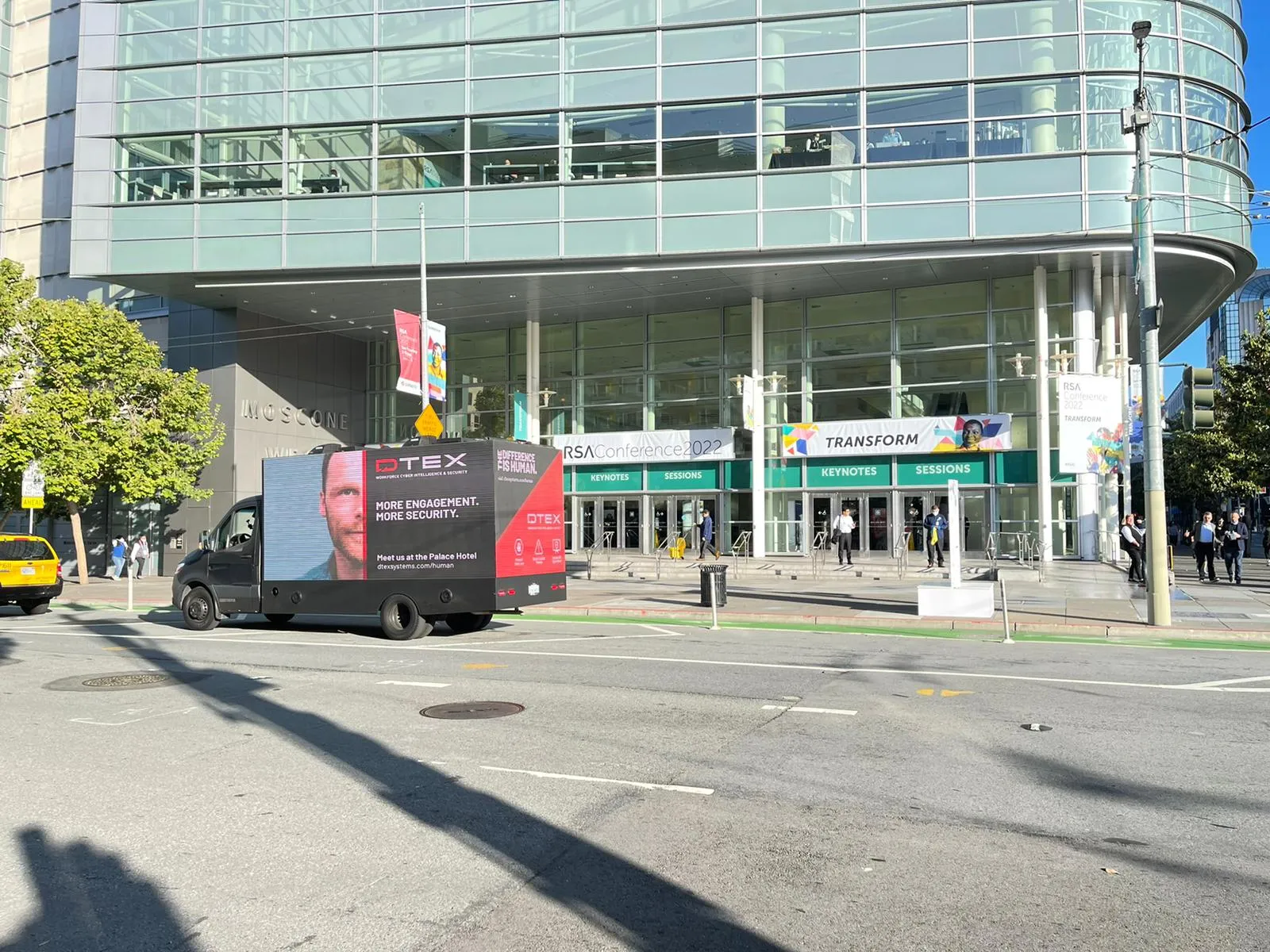
A trade show gathers your entire addressable market into one building for four days and then sells you the right to be visible inside it, at a price the organizer sets. Sponsorship tiers, booth placement and banner inventory are finite, controlled and expensive.
Everything outside the building is not. That asymmetry is the whole strategy.
Why conquesting works at conventions
Attendees at a major show are the most pre-qualified audience you will ever advertise to. They paid to attend, they traveled, and they are there specifically to evaluate vendors in your category. There is no cheaper way to reach that quality of prospect than to be visible where they are already standing.
Non-exhibitors use this to establish presence without buying a booth at all. Exhibitors use it to drive booth traffic and to stay visible outside hall hours. Both work, and both typically cost a fraction of an upgraded sponsorship tier.
Where to route during a show
- Venue perimeter — the entrances and crosswalks attendees cross on foot
- Host hotels — the corridor between the official room block and the hall
- Shuttle stops and rideshare zones — where attendees stand still for minutes with nothing to look at
- Dinner and nightlife districts — where the real conversations happen after hours
- Airport approach — reaching attendees before the show even starts
Timing against the session schedule
This is the mistake most first-time convention campaigns make: they route a steady loop all day. Convention attendance does not flow steadily — it moves in bursts around keynote start, session breaks, hall close and evening events. A truck at the main entrance during a keynote is showing a 180-square-foot screen to an empty sidewalk.
Route against the published schedule instead. And because creative updates remotely at no cost, the same truck can carry a B2B pitch during show hours and a reception invitation in the evening.
Market-specific notes
Las Vegas is the densest convention market in the country, and CES in January, SEMA in November and F1 race weekend are the three hardest windows to book. San Francisco’s Moscone shows — Dreamforce, RSA, JPMorgan Healthcare, GDC — fill SoMa with badge traffic on foot, which suits the short-loop routing the city’s density allows.
San Diego’s Comic-Con is the most extreme example anywhere: for four days the Gaslamp Quarter becomes open advertising territory and brands that are not exhibiting compete entirely on the street. Chicago’s McCormick Place is the largest convention campus in North America, and Orlando’s Orange County Convention Center fills International Drive hotels end to end.
When to book
Earlier than you think. Standard lead time to launch is 24–48 hours from creative approval, but that assumes trucks are available — and during CES, SXSW, Comic-Con or Art Basel week they frequently are not. For a marquee show, book months ahead; for a mid-size regional show, a few weeks is usually sufficient.
Related pages
Want this run in your market?
If trucks are available, your campaign is live in 24–48 hours.
More reading
The Complete Guide to Mobile LED Billboard Truck Advertising in 2026
How mobile LED billboard advertising actually works — hardware, routing, pricing, measurement and when it beats static out-of-home.
Read more → PoliticalHow Political Campaigns Use LED Billboard Trucks
District-level targeting, same-day message changes and rapid response — why mobile LED fits the political calendar better than booked media.
Read more → MarketsLED Truck Advertising in New York City: Routes, Costs and Best Practices
How mobile billboard campaigns work in Manhattan and the outer boroughs — the corridors that matter, what it costs, and the constraints to plan around.
Read more →