
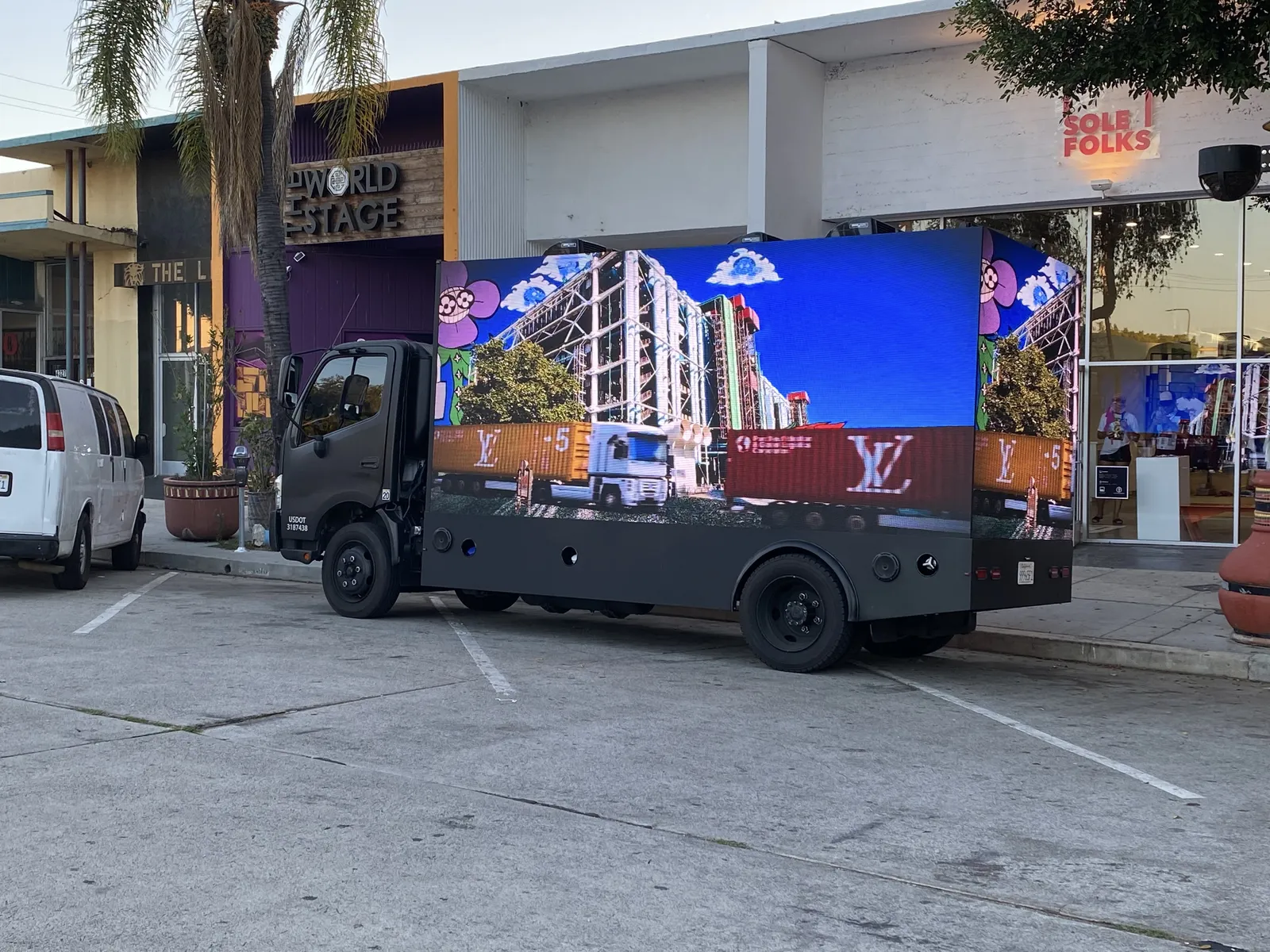
A grand opening is the campaign type mobile LED is most obviously suited to, because every variable that makes the format work is already fixed for you. You know the location. You know the date. You know the trade area. The only question is how to route it.
What follows is the template we use when someone calls about an opening. Adjust the numbers to your category — a restaurant’s trade area is much smaller than a car dealership’s.
Step 1 — define the real trade area
Start with how far people will actually travel to you, not with a round number on a map. A quick-service restaurant draws from perhaps a mile or two; a specialty retailer or a gym might draw from five; a destination business draws from the whole metro.
Then adjust for geography. Trade areas are rarely circles — a highway, a river or a rail line will cut one side off entirely. Route the catchment, not the radius.
Step 2 — time the flight
- Week before opening: awareness routing across the full trade area, message is “opening [date]”
- Opening weekend: concentrated routing tight to the location, message is “open now, here”
- Following two weeks: sustained presence at reduced intensity with an offer-driven message
- Optional: a return flight at 60–90 days when the opening buzz has faded
Step 3 — write creative for the format
The most common mistake is treating the screen like a print ad. Someone driving past reads six to eight words. Name, category, location cue, and one reason to come — that is the whole message. Everything else is decoration.
The one exception is dense pedestrian environments, where people stand at crosswalks and can read considerably more. Know which situation your route is actually in.
Because creative changes remotely at no cost, use that: run the “opening Saturday” message all week and switch it to “now open” at midnight. That switch is free and it is the single highest-value creative decision on an opening campaign.
Step 4 — build in something measurable
Out-of-home is hard to attribute, so give yourself a mechanism. A QR code on a 180-square-foot screen is readable from across a street and converts a physical impression into a trackable action. A code-specific offer works the same way at the register.
On the delivery side, GPS logs verify which streets were actually covered and when, in a live dashboard rather than a post-campaign report — so if a route is not delivering, it can be changed while the campaign is still running.
Budget expectations
Typical campaigns run $1,500 to $5,000+ per day. A reasonable opening flight for a single location is one truck over a week to ten days, weighted heavily toward the opening weekend — not a month of steady low-intensity routing, which spends the same money and lands with less force at the moment that matters.
Related pages
Want this run in your market?
If trucks are available, your campaign is live in 24–48 hours.
More reading
The Complete Guide to Mobile LED Billboard Truck Advertising in 2026
How mobile LED billboard advertising actually works — hardware, routing, pricing, measurement and when it beats static out-of-home.
Read more → PoliticalHow Political Campaigns Use LED Billboard Trucks
District-level targeting, same-day message changes and rapid response — why mobile LED fits the political calendar better than booked media.
Read more → EventsConvention & Trade Show Advertising: How to Stand Out at CES, SXSW and Beyond
Why conquesting the street outside a trade show works, where to route during a show, and how to time creative to the session schedule.
Read more →