
Case Study · Las Vegas
Levi’s Experiential Activation Support in Las Vegas
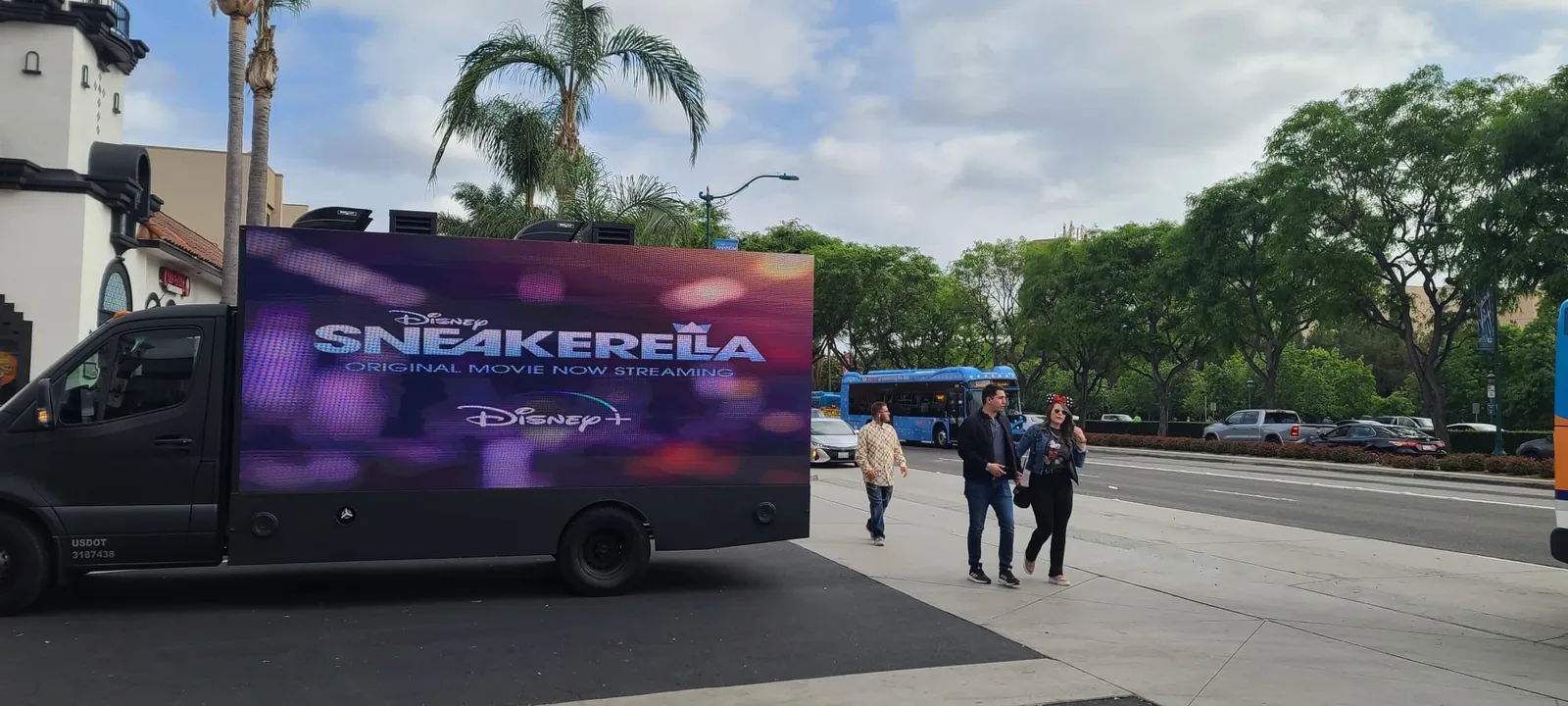
LED trucks amplifying Levi’s on-property experiential team — generating attention and driving traffic to the activation.
The challenge
Experiential marketing has a reach problem that nobody enjoys talking about. A well-built activation converts the people who walk up to it at a high rate — but only a small fraction of the people in the area ever learn it is there. The team is excellent at closing; the difficulty is getting foot traffic to the footprint in the first place.
In Las Vegas that gap is wider than usual, because an activation is competing with a city engineered end to end to capture attention. Standing still and waiting to be noticed is not a strategy on the Strip.
Using the truck as an amplifier
Pairing a mobile LED truck with an on-site team inverts the problem. The activation stays put and does what it does well; the truck goes out into the surrounding corridors and tells several thousand people an hour that it exists and where to find it.
This is the highest-leverage version of the format, because the call to action is short, local and immediate — go here, now, it is two minutes away. A 180-square-foot screen with audio can deliver that message from across a street, and the creative can change through the day as the activation’s schedule changes.
How we route activation support
Support routing is built as a radius around the activation footprint rather than a citywide loop. The goal is frequency inside a walkable distance: repeated passes through the corridors that feed the location, weighted to the hours the team is actually on site.
Where the activation has scheduled moments — an appearance, a giveaway, a demo — creative updates remotely to promote the next one, and GPS logs verify the route coverage against the target radius in a live dashboard.
The measurement advantage of a local call to action
Out-of-home is usually hard to attribute, which is why the category leans on modelled impressions. Activation support is the exception, because the call to action is unusually tight: go to this place, now, it is two minutes away.
That proximity makes the effect observable. Footfall at the activation is already being counted by the on-site team, and the routing schedule is GPS-logged to the minute, so the two records can be read against each other. It is not a controlled experiment, but it is far more direct evidence than most outdoor advertising produces.
Why radius beats reach here
The instinct with a citywide format is to cover the city. For activation support that is precisely wrong — an impression delivered eight miles away is worth close to nothing, because nobody is driving across Las Vegas for a brand experience they just heard about.
So the route is built as a tight radius around the footprint, weighted to the hours the team is on site, with repeated passes through the specific corridors that feed the location on foot. Fewer total impressions, far more of them actionable. Geotargeted routing exists to make that trade deliberately rather than by accident.
Your brand could be next
If trucks are available, campaigns launch in 24–48 hours.