
Case Study · Los Angeles
Louis Vuitton Mobile Billboard Campaign in Los Angeles
A luxury brand activation putting Louis Vuitton creative on our LED trucks through the premium corridors of Los Angeles.
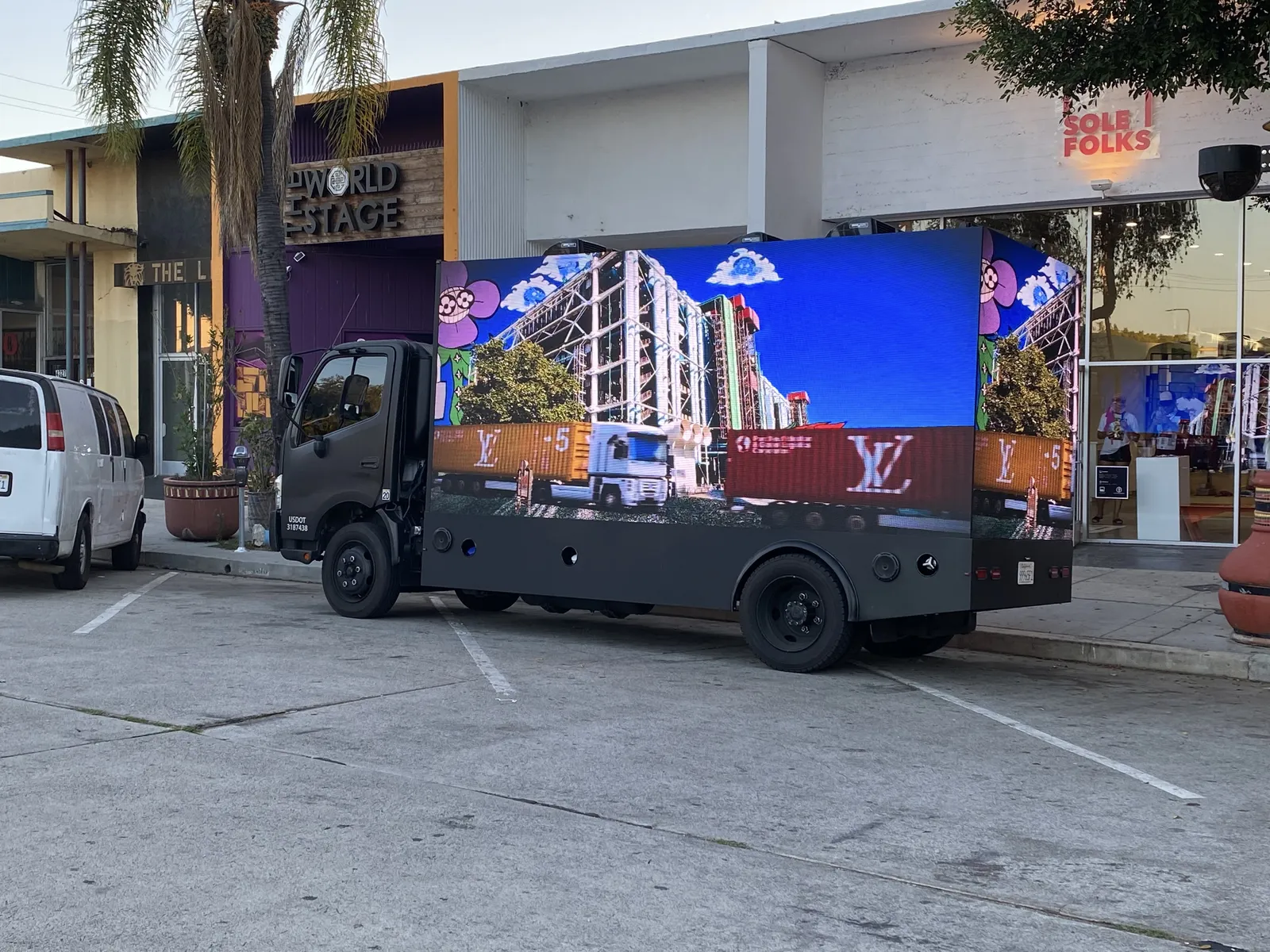
The challenge
Luxury advertising has a placement problem. The environment around the ad does as much work as the ad itself, and in Los Angeles the premium corridors — Rodeo Drive, the Sunset Strip, the blocks around Beverly Hills and Century City — have very little fixed inventory. What exists is expensive, sold in long cycles, and frequently spoken for years in advance.
The deeper issue is that a luxury audience in LA does not stay in one place. The same customer shops in Beverly Hills in the afternoon, attends an event in Hollywood in the evening, and drives the Westside in between. A static placement catches one of those moments. A brand that wants presence across all three needs something that moves.
Why mobile LED suits luxury
The format has one property that matters more here than in any other category: scale without permanence. A 180-square-foot full-motion screen at street level is unmissable, and it appears for exactly the window the brand chooses and then it is gone. That scarcity is closer to how luxury marketing actually works than a twelve-month billboard lease.
Image quality is the other half. Our panels run at 10,000 NIT, which is what keeps fashion creative saturated and sharp in direct California sun rather than washing out to grey at midday — the failure mode that makes cheaper mobile screens unusable for brands like this one.
How we route a campaign like this
Luxury routing in LA is built around dayparts rather than mileage. Retail corridors during shopping hours, event and nightlife corridors in the evening, and the connecting arterials in between — with the route planned so the same audience encounters the truck more than once in a day without it feeling repetitive.
Every mile is GPS-logged, with routes, timestamps and verified impression zones reported to a live dashboard, plus proof-of-performance photos and video from the road. For a brand with this level of guideline discipline, being able to show exactly where creative appeared is not a nice extra — it is a requirement.
What the creative had to survive
Luxury creative fails outdoors in a specific way: it goes muddy. Fashion work relies on subtle tonal range, deep blacks and precise colour, and most outdoor digital screens crush all three — blacks lift to grey, gradients band, and a campaign that was approved on a calibrated monitor looks cheap on the street.
Brightness is what prevents that. A 10,000 NIT panel is not simply "brighter"; it holds contrast ratio under ambient light that would flatten a dimmer screen. For a brand operating under strict global guidelines, that is the difference between an asset being approved for outdoor use and being rejected.
It also means creative does not need a separate, simplified outdoor cut. The assets produced for digital and in-store run on the truck without being dumbed down.
Why a moving format suits a fixed audience
Luxury retail in Los Angeles is concentrated but not contiguous. Beverly Hills, Century City, the Sunset Strip and the Westside boutiques each hold part of the same customer base, separated by ten or fifteen minutes of driving that the customer does constantly and the advertiser normally cannot follow.
A route ties those islands together. Rather than buying presence in one of them and hoping for overlap, the campaign reaches the same customer in more than one context across a single day — a materially different frequency profile from any fixed placement in the same budget range.
Your brand could be next
If trucks are available, campaigns launch in 24–48 hours.