
Case Study · Las Vegas
McDonald’s LED Truck Campaign on the Las Vegas Strip
A high-frequency LED truck campaign putting McDonald’s in front of tourist crowds along the Las Vegas Strip corridor.
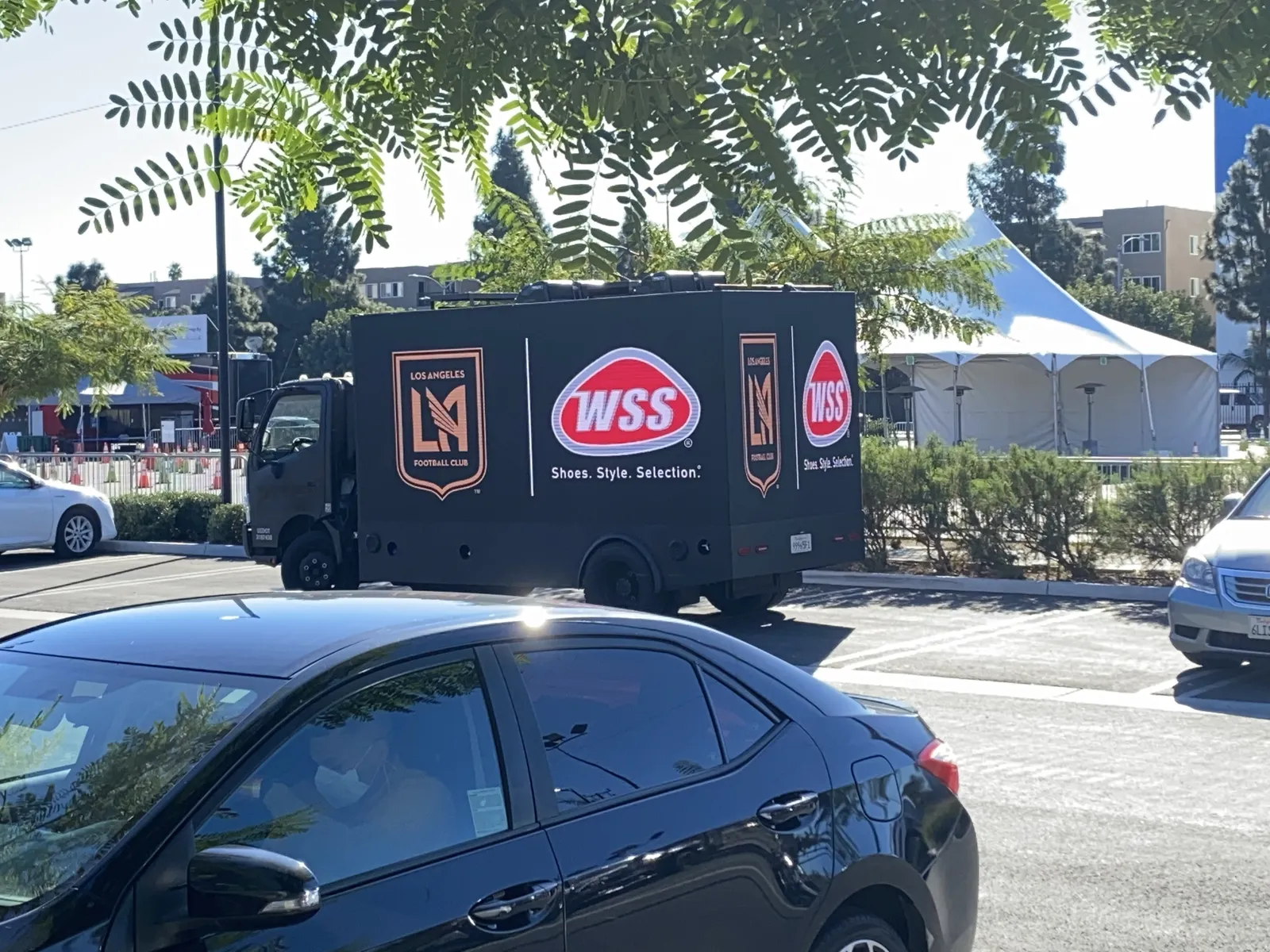
The challenge
Quick-service restaurant marketing is a proximity business. The decision happens close to the moment of hunger and close to the location, which makes reach in the right few blocks worth far more than broad reach across a metro.
Las Vegas concentrates that problem into four miles. The Strip carries an enormous, constantly refreshing visitor population who are walking, unfamiliar with the city, and deciding where to eat several times a day — but fixed inventory along that corridor is the most expensive and most contested in the country.
Why the Strip rewards frequency
Most markets force a trade-off between reach and frequency. The Strip does not. Traffic moves slowly enough that a truck passes the same sidewalk repeatedly within an evening, while the crowd on that sidewalk turns over continuously — so frequency against the corridor and reach against people both climb at the same time.
Pedestrian density is the reason Strip routing sits at the top of our 30,000–70,000+ daily impression range. The audience is on foot, at eye level, at walking distance from the screen, with the specific intent of looking at their surroundings.
How we route the Strip
Strip campaigns are evening-weighted, building from mid-afternoon and running through the late-night peak, with routing that works Las Vegas Boulevard alongside the parallel corridors — Paradise, Koval and the cross-Strip connectors at Flamingo and Tropicana — so the truck is not simply looping one street.
We confirm current local operating requirements before every Vegas deployment, and GPS logs every route, timestamp and verified impression zone to a live dashboard with proof-of-performance photos and video.
Why the Strip breaks the usual reach-frequency trade-off
In a normal market you choose. Route widely and you reach many people once; route narrowly and you reach fewer people repeatedly. Budget decides which compromise you make.
The Strip removes the choice. Traffic moves slowly enough that a truck passes the same stretch of sidewalk several times in an evening, which would normally mean burning frequency on a static population — except the population on that sidewalk turns over continuously as visitors arrive, leave and move between properties.
The practical result is that both numbers climb together, which is why Strip routing sits at the top of our 30,000–70,000+ daily impression range rather than the middle.
Creative for a walking audience
Most out-of-home creative is written for a driver: six words, a logo, read at speed from three lanes away. The Strip is the opposite problem. The audience is on foot, often standing still, at a distance of a few metres, with time to look.
That supports more than a headline — a product shot that actually reads, a location cue, a scannable code. It is one of the few environments in the country where a QR code on outdoor advertising reliably converts, because the viewer is stationary, close, and already holding their phone.
Your brand could be next
If trucks are available, campaigns launch in 24–48 hours.